 Consumer
Penmark
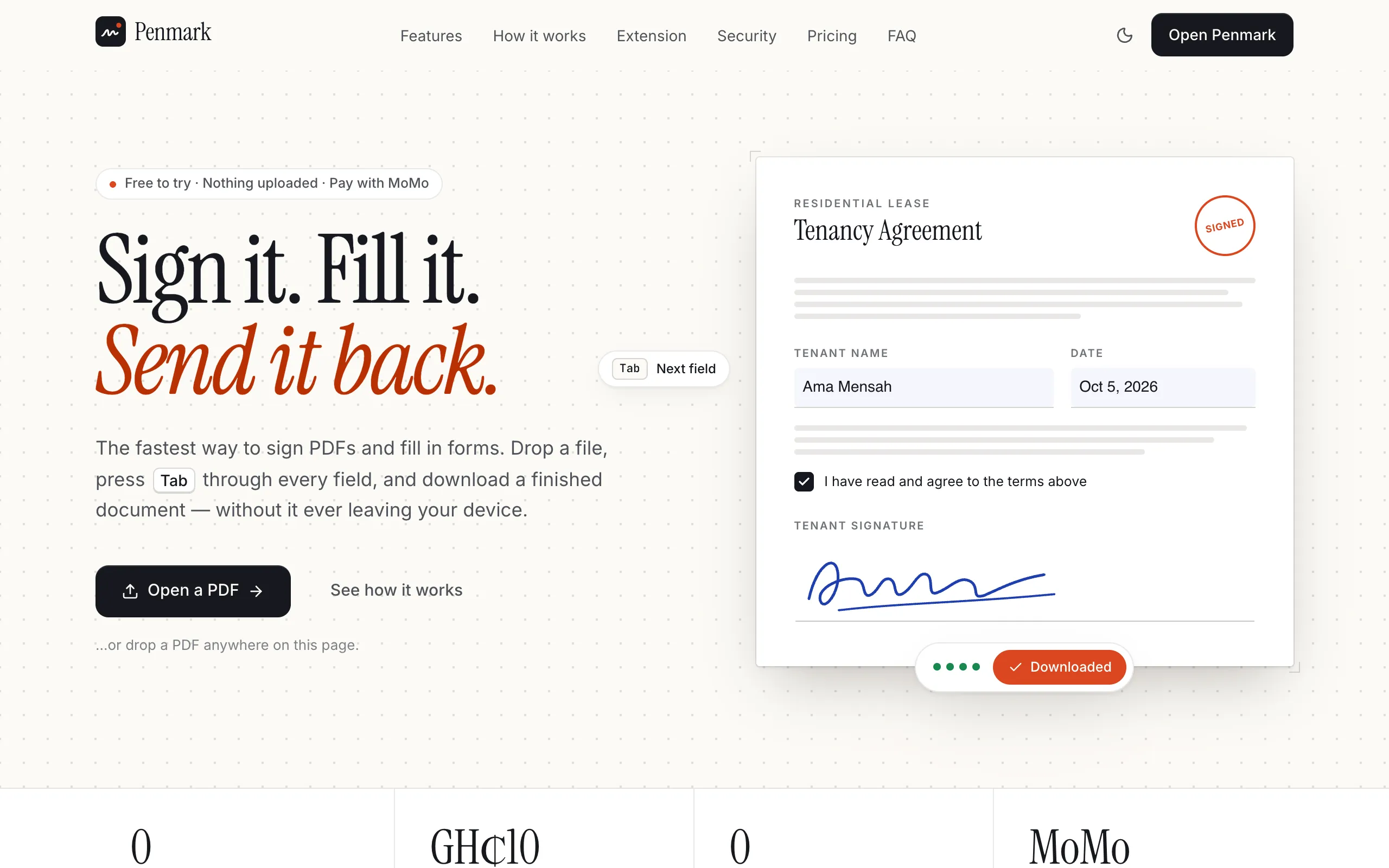
2026 — presentSign PDFs and fill forms in the browser, without uploading the file
LiveTypeScriptNext.js 16React 19+10Open
An AI secretary and back office for small businesses, multi-tenant from the first row
A small business misses work because nobody answered the phone. Frontdesk is the answer to that specific loss: the business connects the channels it already uses and an assistant sits behind all of them at once, reading what comes in, drafting what should go back, and putting meetings on the calendar while it drafts.
The default is draft-then-approve. Nothing leaves without the owner releasing it until the owner opts a category in — FAQs and scheduling confirmations can be allowed to send unattended, and everything else keeps waiting. Autonomy is something the business turns on per category, not the starting state.
Every conversation, contact, setting and credential row carries the business it belongs to, and queries are scoped to the signed-in session rather than filtered in the interface. The harder half is inbound: all tenants share one set of webhook URLs, so routing has to work out which business a message belongs to before anything can be written. Inbound SMS and voice route on the receiving phone number, WhatsApp on the sender’s registered number id, and message ids dedupe the redeliveries that gateways send when they think a response was too slow.
Each business brings its own channel accounts, which means the platform stores other people’s API keys — so they are encrypted with AES-256-GCM at rest under a platform secret, and webhook signatures are verified per tenant.
Drafting, voice turns, auto-reply classification and check-in photo verification all go through one interface with three implementations behind it: a paid frontier model for best quality, a free hosted endpoint, or a fully local model. The reason is cost geography. A product priced for a business in Accra cannot have a per-message cost floor set in a currency it does not earn in, so the operator picks the provider and the product works either way.
The inbox was the starting point, and the back office followed it, because the businesses that need somebody to answer the phone need the same things immediately afterwards:
The application is built and runs, and it has never been launched. Storage is a single SQLite file — deliberate, because it made the whole thing runnable with no infrastructure, and it is also the thing that has to change before deployment: the repository carries a launch checklist whose first item is that a filesystem database needs a host with a persistent disk, or a migration to Postgres. It is listed here as previous work rather than a product, because nobody can sign up for it.
ConsumerSign PDFs and fill forms in the browser, without uploading the file
A barbershop operating system designed around the walk-in queue and mobile money
A church website with the membership admin a Ghanaian congregation actually needs